


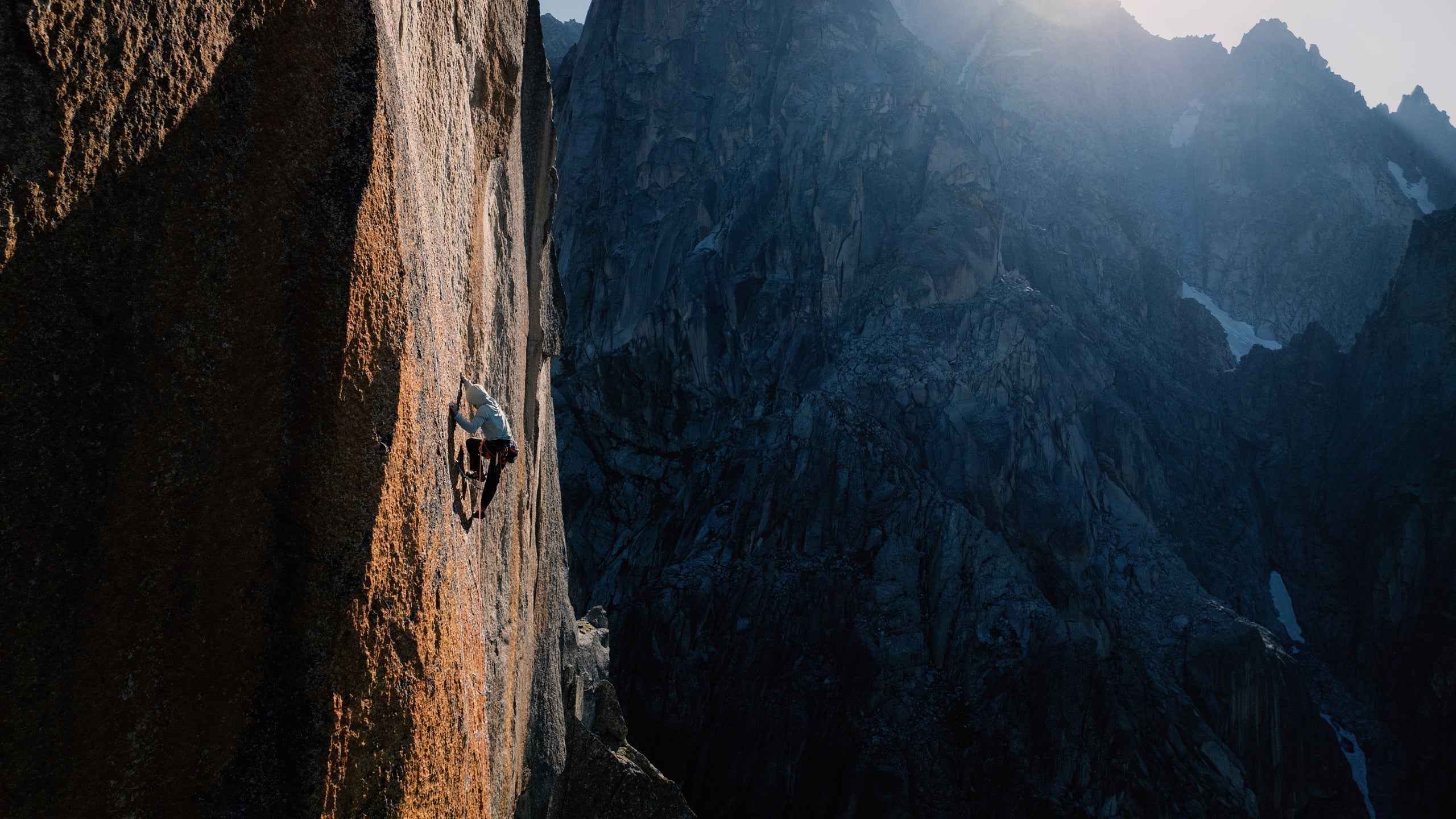
Camilla Moroni on Histoire sans fin
For many climbers, the pull of real rock is a quiet call, constant, persistent, and impossible to ignore. For Camilla Moroni, SCARPA global team athlete and one of Italy’s strongest competition climbers, answering that call meant stepping out of the demanding world of indoor performance and into the raw unpredictability of the mountains.
Fresh from completing the first female ascent of Histoire sans fin on Mont Blanc, Camilla shares what it truly means to move from the precision of World Cup training to the demanding beauty of high-altitude, multi-pitch climbing. It’s a journey of rediscovering balance, embracing vulnerability, and transforming the discipline, sacrifice, and mental strength of competitive sport into something deeper, connection, trust, and the pure pleasure of pushing limits on real stone.
In this interview, she reveals how returning to the essence of climbing can reshape an athlete’s perspective: stepping back from rankings and routines to reconnect with what first sparked the passion: the mountain itself.

How did the idea of climbing this particular route come about? And what did it represent for you even before getting on it?
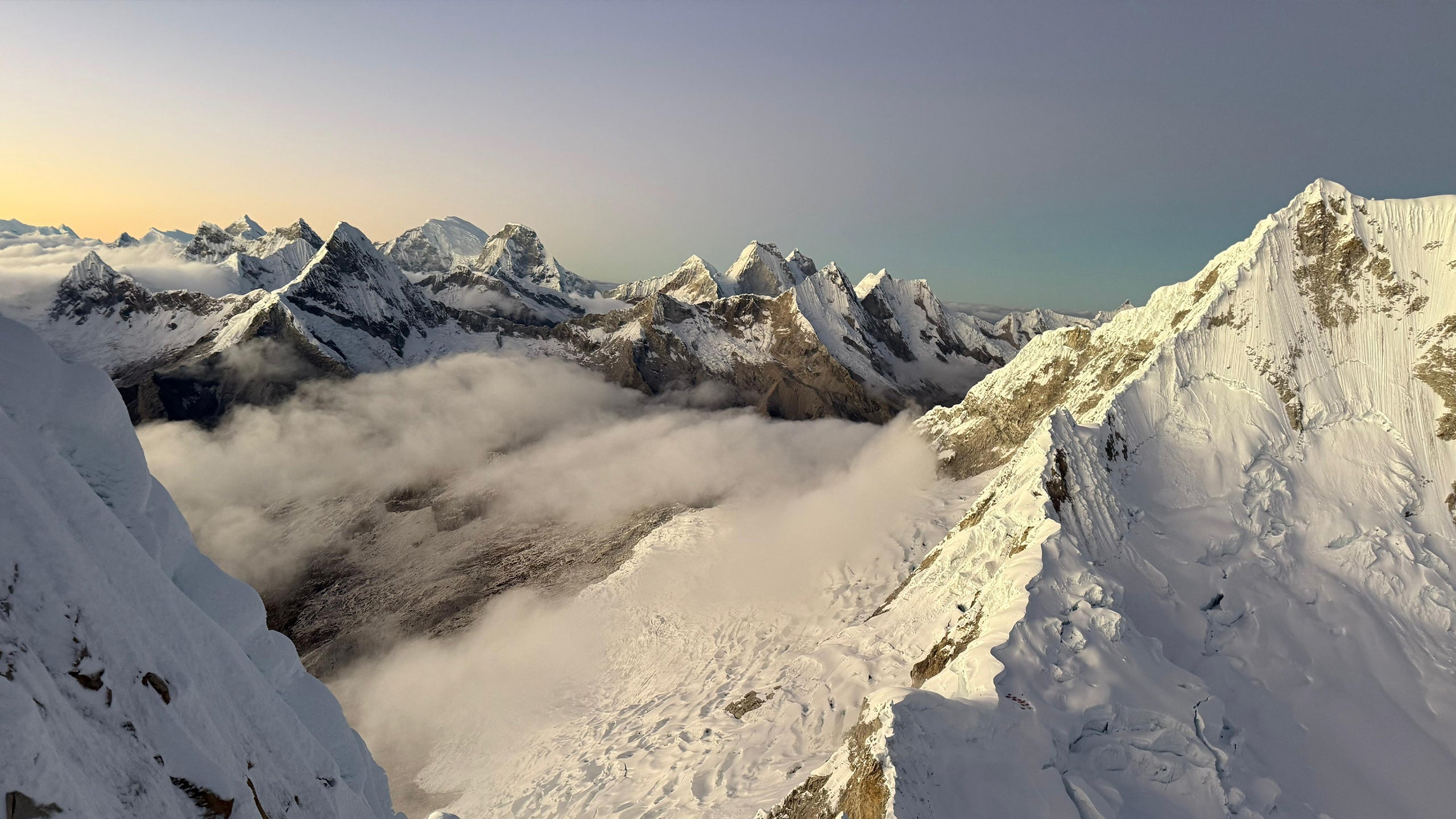
Last summer I saw some photos of this line that immediately struck me for its beauty and aesthetics. I showed them to Pie right away, and he was just as fascinated. We absolutely had to go try it. Unfortunately, between training and other commitments, we couldn’t find the time. Finally, this year, almost a year after spotting it, we found the chance to try it together.
How much time did you dedicate to preparing for the project — physically, logistically, and emotionally?
We didn’t really prepare specifically for this route. I had just finished the Boulder World Cup season and hadn’t worn a harness, trained endurance, or touched rock in about six months. Pie, on the other hand, definitely more used to climbing on rock than I am, had just completed a training phase focused on outdoor bouldering. Logistically it was a bit more complicated than we’re used to. It took two and a half hours of approach with fairly heavy backpacks to reach the camp where we’d pitch the tent, since we planned to stay for three or four days. It was our first time camping at high altitude! The first few days were the hardest for me. Not being in shape, I felt the fatigue more, as well as the effects of the altitude. After descending to rest for a few days, I felt much better when we returned — I had gotten used to the environment by then. Emotionally, I was quite calm, because for me it felt like a sort of vacation after the competitive season.
During the climb: was there a moment when you looked at each other and knew you were going to make it?
That day, when we set off for the push, Pie was pretty confident he’d send the route, because he’d had great runs on the individual pitches in the days before. I, on the other hand, was not confident at all. I had struggled a lot in the previous days, and to be honest, not even Pie thought I’d manage to send it. But if there’s one thing I’m good at, it’s switching into “competition mode” — that mental state of maximum focus and motivation where I can fight and pull out more than 100%. As I always say in comps: it’s not over until it’s over! After we both sent the 8b+, we got to the most critical part. For me, the 8b was the crux pitch. Pie sent it on his first try and stayed there to cheer me on. His support was fundamental. He kept telling me we’d stay there until I got it. On the first try, I slipped a foot. I came down, rested, then gave it another go. That was the attempt when I was the most tense. Once I passed the arete, all that was left was the final delicate traverse to reach the anchor. I tried to stay calm and focused. When I clipped the chains, it was a huge relief — not just for me, but for Pie too, who was probably more nervous belaying than I was climbing. That’s when we knew we had it! All that was left was the last hard pitch, the 8a+, which hadn’t given us too much trouble in the previous days.

You’re both 23, still young — a background rooted in indoor plastic, but now you’re aiming for the big walls.
We’ve actually taken slightly different paths. My main focus has always been competitions, and it’ll stay that way at least until LA 2028. Pie, on the other hand, chose this year to focus solely on rock climbing, exploring all its facets — from boulders to big walls. For me, rock is a way to recharge my mind after long competition seasons. It’s something I can’t give up; I need it. In recent years, I’ve also started exploring this new world, looking for new stimuli, new challenges, and new things to learn. I like to define myself as: a comp climber addicted to the rock.
Especially you, Camilla: one year you’re competing at the Paris 2024 Olympic Games, and now you’ve completed the first female ascent of a multi-pitch on Mont Blanc. How do you see your evolution in the next few years (and that of the sport)?
As I’ve said, I’ll definitely stay focused on competitions until LA 2028, because one of my goals is to qualify for the Olympics again. Rock climbing is a parallel project I pursue in the few free moments I have between training and competitions. For now, it plays a smaller role, but it will probably become much more important after my competitive career. I think my path is a bit unusual these days. There are fewer and fewer competition climbers heading to the rock — both because the sport is growing and requires more time and dedication, and because many young people discover climbing in the gym. If no one passes on a passion for rock to them, it’s hard for that passion to develop. I, for example, started thanks to my parents, who introduced me to rock. That’s where my passion was born, and now I can’t do without it.
Did you feel the “weight” of being the first woman to climb this route, or did you choose to experience it as a personal ascent, without attaching external meaning?
Of course, the idea of a first female ascent was appealing, but the real reason I wanted to try this route was because of its beauty and aesthetic line. A very airy and technical route, where you can slip a foot at any moment if you’re not fully focused. For me, it was mainly a personal challenge — escaping the comfort zone of competitions and throwing myself into something new.
After this ascent, do you feel you’ve changed? As an athlete, but also as a person?
This ascent definitely enriched my experience as a climber and gave me precious memories that I’ll carry with me for a long time. As an athlete, I rediscovered a type of climbing that tests you in different ways — it requires patience, adaptability, and a lot of trust in your feet. As a person, it did me good to experience something so immersive, far from the hectic rhythm of competitions. I rediscovered the joy of climbing without thinking about scores or rankings.
Just me and the wall.