


Four Perfect Minutes
For four years, Café Colombia was more than just a route. It became an obsession, a daily confrontation with doubt, frustration, precision, and the search for perfection. Attempt after attempt, the line demanded everything: finger strength, resistance, mental control, and above all, patience.
When the send finally came, it wasn’t because the wall suddenly felt easier. It was because, for four perfect minutes, everything aligned.
In this interview, we dive into the mind of the climber behind one of the most impressive first ascents of recent years, exploring the mental battles, the microscopic details and the lessons learned after closing a chapter that once felt impossible.
The “Send” moment: Last year, you spoke about the need for perfection. What was different on the day you finally sent Café Colombia? Did you somehow feel it was the right try from the start?
It didn’t feel like a particularly special day before I started. In fact, I didn’t have the sense that it would be the one.
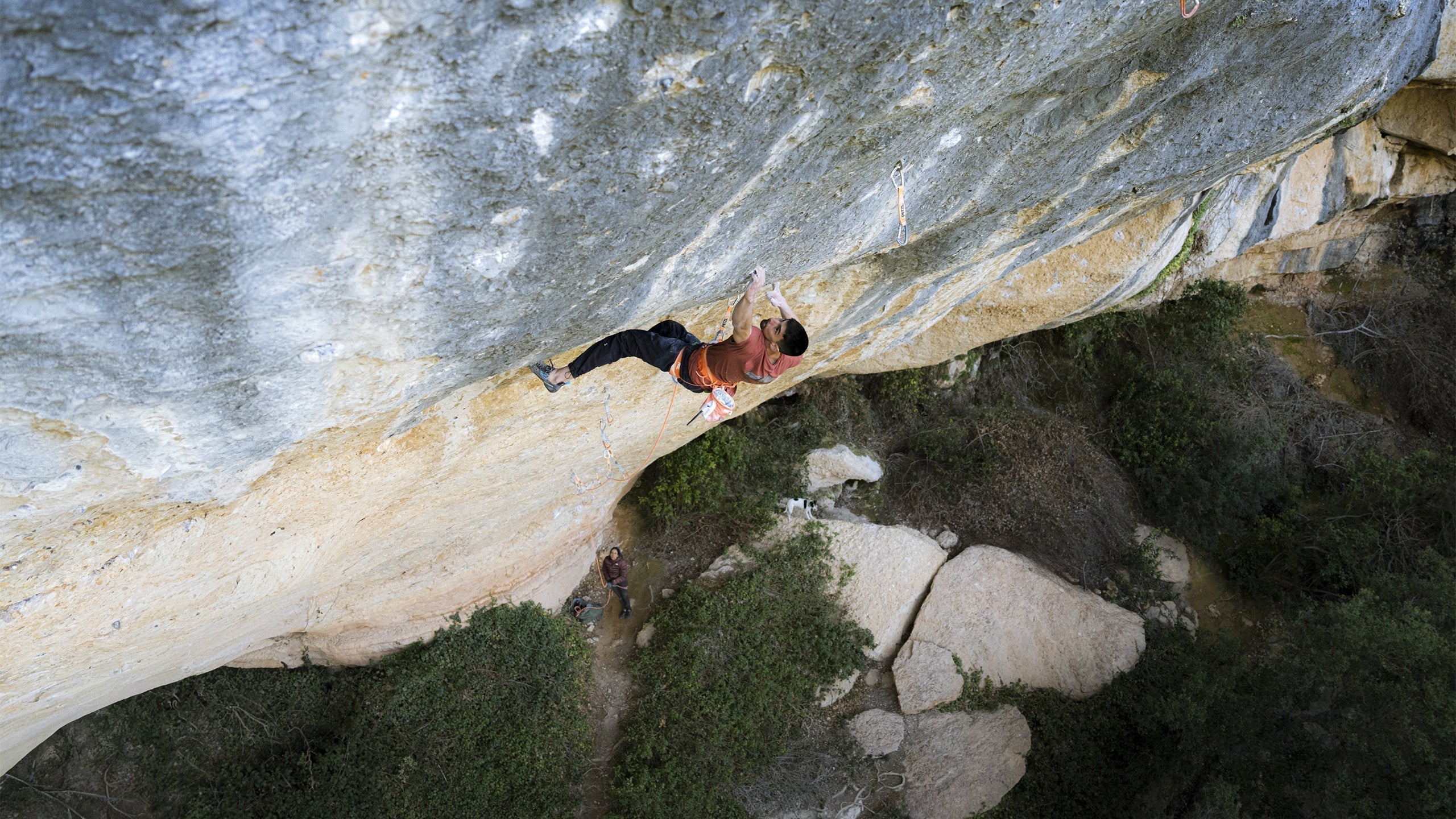
Once I was on the wall, what made the difference was efficiency. I managed to climb with a level of precision that was even better than in many previous great attempts. Everything flowed within a rhythm I had already internalized, without needing to force anything or make corrections. I literally felt like I was floating, it was the most perfect four minutes of climbing of my life.
Details: tell us about some micro details you took care about. Maybe something about the Chimera climbing shoes as well?
I paid attention to every tiny detail like never before on this project. I tried to be as analytical as possible as a climber, and combined with my level of self-demand, I think I truly did everything within my control.
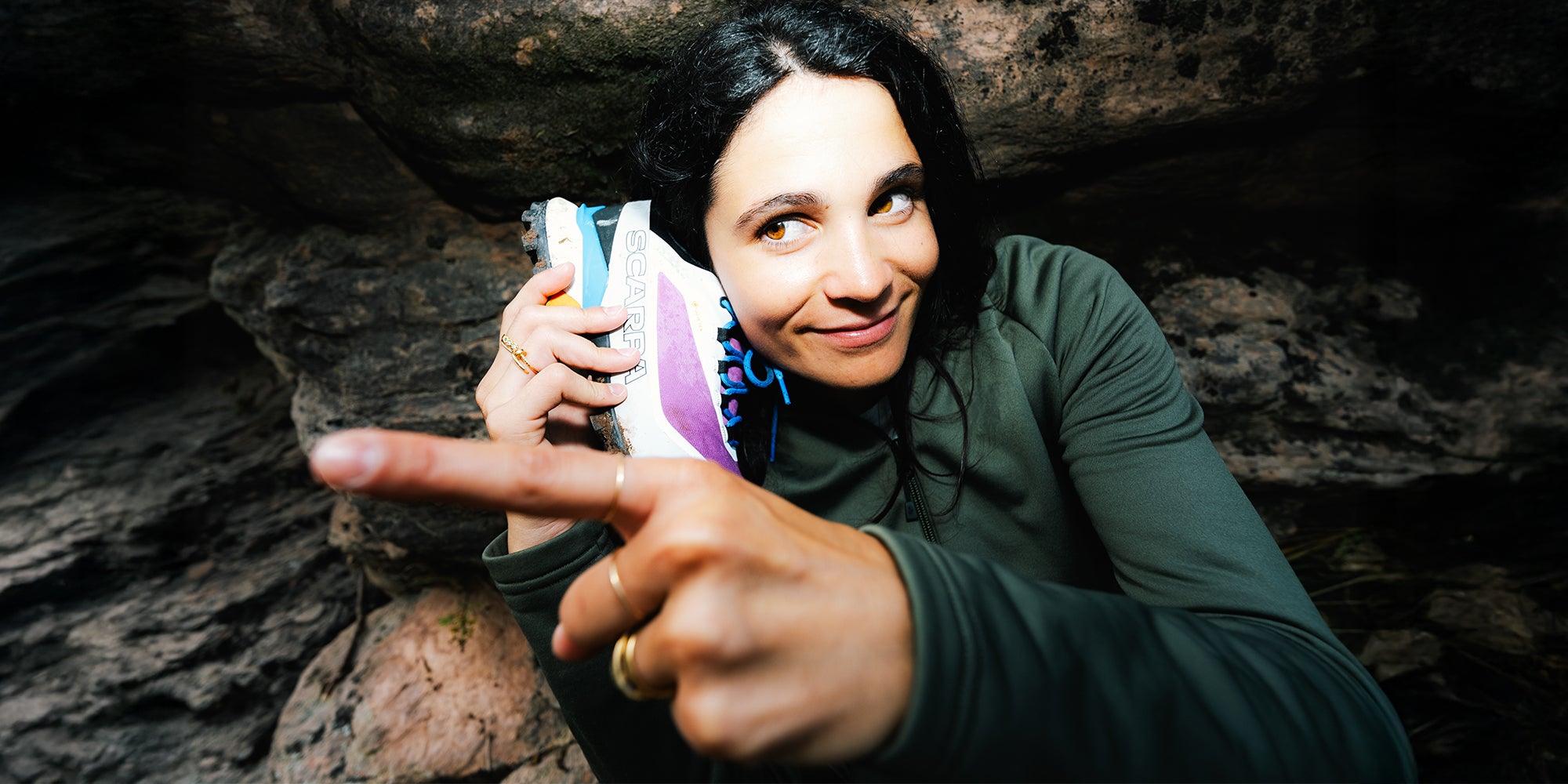
It would be crazy to describe all the details I have in my head about the route, but my focus was always on the mental side, timing, and precision on every hold and every foot placement. One thing that was absolutely decisive was choosing the right shoe. From the very beginning, I went with the Chimera, they’re perfect for this kind of small footholds, with that balance of stiffness in the sole and flexibility. They were the most efficient option for really standing on those tiny pockets on this wall.
From doubt to success: Last year you mentioned struggling with self-confidence on this line. How did it feel to finally prove to yourself that the route was possible?
Without a doubt, the hardest part of the project was dealing with frustration, and with it, many times, my self-confidence. On top of that, it’s an unclimbed route, so the doubt about whether it’s even possible is always there, and those thoughts play against you.
There were many days, even entire periods, where I felt like I was going backwards. I took a lot of hits, and getting back up from some of them was really tough. In a project that pushes you so far, for so long, you go through every possible emotion, and the hardest part is always to keep moving forward.
What maybe changed this last year is that I became aware that this challenge was going to make me a better climber. I shifted my focus more toward improving on the route rather than just sending it. That made me more analytical, and I started to see constant progress beyond just putting in good attempts. Even when I was very close in the final days, I tried to ignore whether I would send it or not, I was only thinking about flowing on the wall.
The grade: Proposing a grade for a First Ascent (FA) is a big responsibility. How does it feel to put that number out there?
It’s definitely something I’ve felt a lot of responsibility for, even more so considering the level and the possibility that it could be one of the hardest routes in the world.
At the same time, when it came to proposing a grade, I felt calm because I was very confident in myself, and also excited. I had never really stopped to think about the difficulty until after I did it, and that, in itself, meant I had finally sent it. It was time to express the difficulty I felt, along with all the sacrifice and effort I had put in over these past years to achieve this first ascent.

The mental shift: You worked a lot with a sports psychologist to handle the frustration of this project. How has closing this 4-year chapter changed you as a climber and as a person?
A project like this, over such a long time, teaches you all kinds of lessons, not just as an athlete, but also on a personal level.
Improving in this area has changed the way I think and approach projects. I feel more mature as a climber, and I’m sure all of this will be an extra asset for future challenges.
The line’s essence: After spending so much time on these 30 meters, is there a specific movement or section that you feel represents the true heart of Café Colombia?
It’s an endurance route, 40 moves, almost without rest, on an overhang with small, stretched-out holds and quite poor footholds.
The difficulty isn’t concentrated in a single move, but in the need to maintain the same level throughout the entire route. Everything has to work at once: finger strength, endurance, precision, and rhythm, any small mistake is crucial.
It didn’t actually take me that many days to do the sections individually, I think around day 25 I did it with a rest. But the real difficulty was linking it all together. Every move adds up a lot, and I’d say the biggest shift comes in the final section, where you arrive very fatigued and face a more defined crux.
Shared victory: You once said you felt lonely trying this route. Who was there with you on the day of the redpoint, and how important was their support in the end?
The send moment was incredible. It’s true that some friends were missing, and I wish they could have been there because I had shared so much of the process with them.
But luckily, the crag was full of energy, and I still got to share it with many friends. In particular, my coach, Ekhioz Alsasua, was down below cheering me on; my partner, Mariana Fierro, was on the other end of the rope; and my friend Jaume Cebolla was next to me filming the ascent. Before starting the attempt, my motivation was through the roof.
What’s next? Now that your head is finally "free" from this obsession, are you heading straight to other FA mega-projects, or big projects like DNA, or do you feel the need to travel and climb more variety for a while?
It was to be expected that after such a big battle, I’d feel a drop, both physically and mentally.
Right now, I think it’s really important to rest and give myself some time to process everything, because even after a week, I still haven’t fully been able to believe that I actually did it.
I have many projects in mind, and in particular, I’d like to get back into bouldering a bit this year, I’m curious to see how far I can go in that style. But for now, the plan is to spend a few months until summer climbing in different places, enjoying time with friends, and reconnecting with myself. In the short term, I don’t see myself going back to something as demanding as this project.
Advice for seekers: what is the most important lesson Café Colombia taught you that you would share with someone currently stuck in their own "impossible" project?
I think the most important lesson has been that you should never stop fighting for your dreams. Even when you hit setbacks, you have to stay on the path, no rush, but no pause either, and enjoy the whole journey.
Sometimes, those dreams do come true.
Before Café Colombia became a reality, there were only attempts, doubts, and a vision still waiting to be realized. Read the interview we published last year about the Café Colombia project.