




Vertical Commitment
Sustainable Bigwall Climbing with the Boostic R
About Eline Le Menestrel:
My name is Eline, I’m 27 years old. I’m a rock climber and an environmental activist from France and Belgium. My goal is to promote sustainable and inclusive outdoor practices as I see them as transformative tool that can bring broader systemic change. I push my limits in climbing to show that performance and environmental responsibility can go hand in hand. I’m a pioneer of the Ecopoint Climbing Movement and the combination of bike and train has become my main mode of transportation. I’m also a student in environmental science and management, and I connect the different worlds I interact with. By bridging disciplines and perspectives, I aim to engage as many stakeholders as possible in a collective transformation towards a fairer and more sustainable world—one that respects all forms of life.
Her climbing style:
My heart beats for outdoor climbing. It’s in my genes. I was born in Fontainebleau and I started playing and climbing on the small boulders as soon as I started walking. I remember how my Dad taught my sister and I to focus on our feet when we climb. He used to say that people think we climb with our arms but that actually it should be as much as possible about our legs and our footwork. My grandfather taught us how to clean our climbing shoes before climbing. There couldn’t be any sand grain left on our soles before stepping on a boulder! Clean climbing shoes also help preserve the rock from erosion, especially when climbing on sandstone. Growing up, I started liking multipitch more and more. At 20 years old, as I was traveling in the US I ended up climbing in Yosemite with my good friend Nina Caprez. She took me on the Nose and I fell in love with bigwall climbing.

Vertical Big wall climbing:
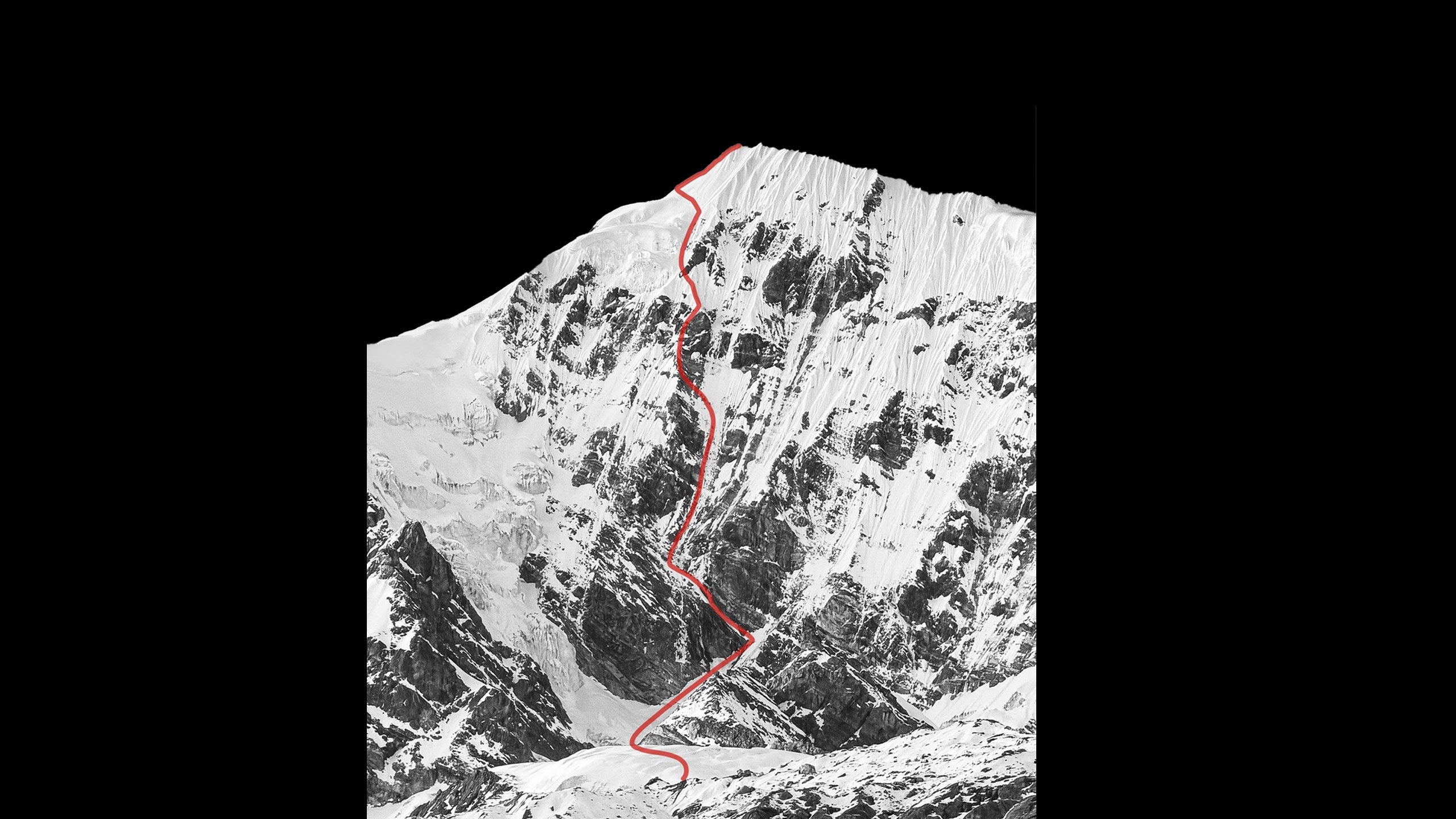
Bigwall climbing (and specifically vertical routes) comes with specific needs in terms of climbing shoes. In this style of climbing, we find ourselves spending long days on the wall, sometimes climbing more than 8 pitches a day, multiple days in a row. Comfort becomes a key element to perform and make sure climbing remains somewhat enjoyable. But if like me, you like to challenge yourself trying your maximum grade on a bigwall or a multipitch, you will soon find out that we also need to bring out our best footwork. Specially since bigwalls are often vertical or slightly overhanging, offering a climbing style where we need to stand on tiny foot holds. How to find a balance between comfort and precision?
My favorite choice, the Boostic R:
Before keeping on reading, please remember that each climber might have specific needs and that our comfort and precision also depend on the shape of our feet, our weight and our climbing style. What works for me might not work for everyone.
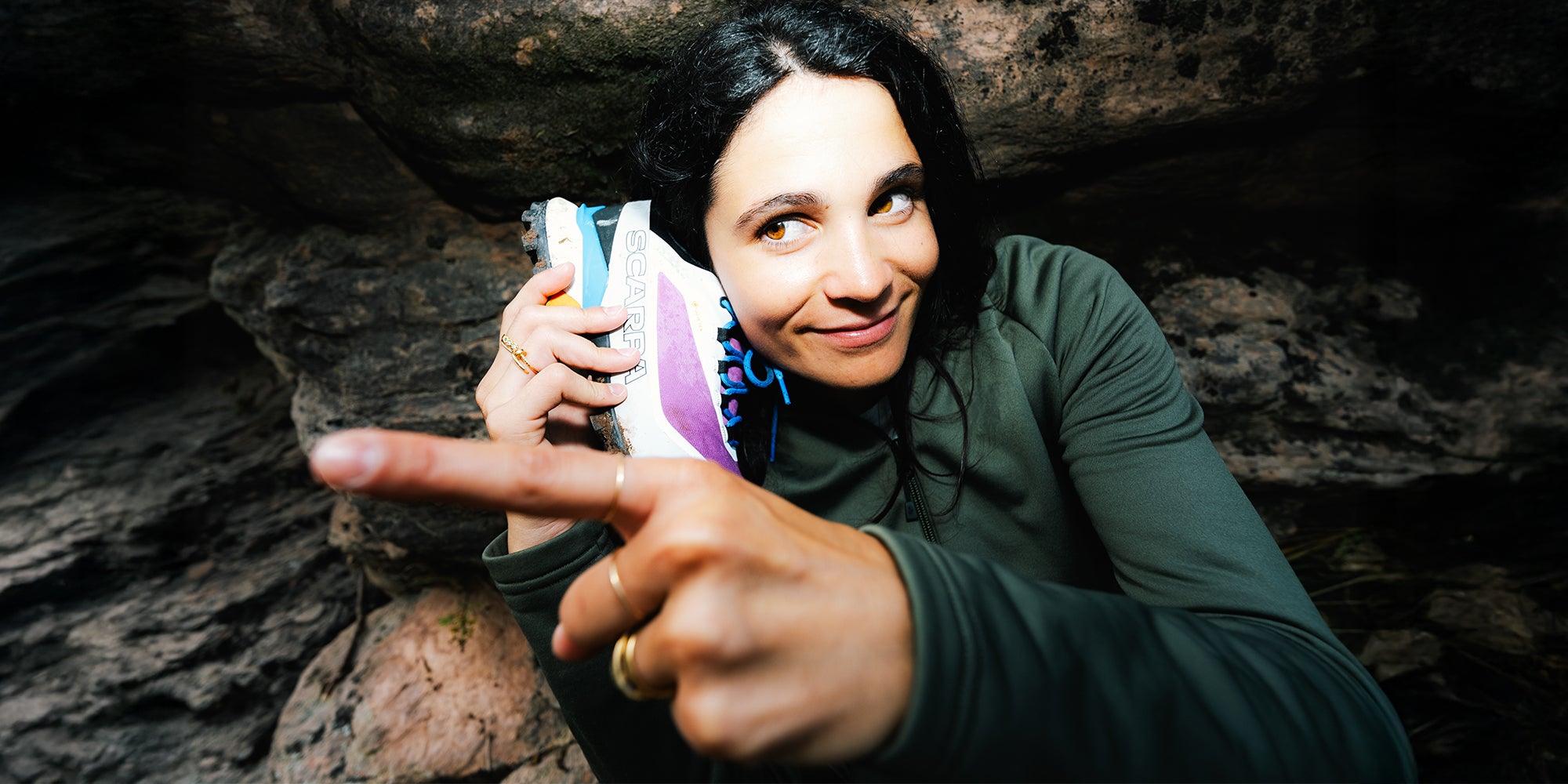
To have precision and comfort without compromise, I choose the SCARPA Boostic R. They have become my feet’s best friend for multipitch and bigwall climbing (and also for most of my sport climbing projects). First of all, because they have full-length 4 mm thick Vibram® XS Edge, which makes them quite stiff. This allows me to stand on my feet for a long time without having pain in the arches of my feet. Second, the tip of the shoe is pointed enough to be extremely precise and stand on the smallest footholds. Last but not least, they are made of highly elastic material which makes them very comfortable, and the dual-strap closure system provides a customizable fit.
When I climb with the Boostic R I often have this amazing feeling where the tiniest rock feature becomes a foothold. And by the way, if you are looking for a place to practice your footwork come climb in Freÿr, Belgium. You might understand why so many Belgian climbers are into technical bigwall climbing.

When I try a bigwall and I haul my gear, I usually bring more than one pair of Boostic R. Here’s an approximative guide of the sizes I use to give you an idea:
• For approach shoes I wear 38
• For pitches up to 7b I use the Boostic R in 38
• For pitches up to 8a+ I use the Boostic R in 37,5
• For 8b or 8b+ pitches (my maximum sports climbing grade is 8b+) I use the Boostic R in 37 or 36,5.
If I cannot haul my gear and I can only bring one pair of shoes, I will prioritize comfort overprecision and bring a 37,5 pair.
The magic of resoling:
Resoling can be our best ally to make sure our climbing shoes provide what we need to push our limits. Resoled climbing shoes are as precise as new shoes new but they are already adapted to our feet, so they don’t hurt anymore. I find that a resoled pair of Boostic R is even better than a new one. It is also a great way to reduce the negative environmental impacts and to take a step away from the production-consumption loops. I won’t go into detail concerning the environmental aspects of resoling. Still, I am convinced resoling is better for our climbing as well as for the planet so here are a few answers I collected along the way.

Can any climbing shoes be resoled?
Resoling works better for some models than others. It works particularly well for the Boostic R, and for all the models that have a tension system. One thing is for sure, if you are interested in resoling your climbing shoes, buying a high quality shoe makes total sense. Indeed, high quality climbing shoes are expensive. But if you can resole them several times, it becomes totally worth it.
How many times can climbing shoes be resoled?
Again, it depends on the model and on how much the climbing shoes are taken care off. To give you an idea, a Boostic R can be resoled 5-6 times and still be your best ally. For some other models it can go up to 10-12 times.
How to take good care of climbing shoes?
The upper part of your climbing shoes is the one that you should treat with most care as it is the only part that cannot be replaced. The parts made of leather demand a special care because the salt present in our sweat can destroys the leather. Not every climber has the same sweat and sweats the same way! If you sweat a lot or love to go climbing in Rodellar when it’s 38 degrees outside, washing your climbing shoes with clear water and then drying it with a cloth at least once a week is a great idea. Again, the problem is not to put the leather in contact with water, it’s the salt (and other toxins) present in the sweat. For any climbing shoes, make sure to have clean feet before putting on your climbing shoes.
When is the good moment to send shoes to resoling?
This is a tricky question because it depends on what you want to climb with your shoes. Personally, when I am projecting a technical route at my maximum grade, I need a very edgy sole to stand on the smallest footholds. Sometimes, I only have 10 good goes with a pair of freshly resoled shoes. I can still use the pair to try the route when I am far from sending, working on a less foot-demanding project or training. In any case, it is best to resole a shoe before the first holes appear.
Where to resole?
The most important is that your resoler uses the same sole as the manufacturer. Official Scarpa resolers use only original materials provided by Scarpa, are trained and equipped with all the tools needed to resole a shoe without sacrificing performance. You can find all the official SCARPA resolers online.
This blog never aimed to be exhaustive but if you learned something from it or are left with any questions, feel free to reach out!
See you on the rock,
Eline Le Menestrel
Pics: ©Pino Pictures & ©Julien Nadiras