


Northaway
A way through the north. Away from the modern turbo alpinism.
A way back to self-sustained, minimalistic mountaineering.
A way across Europe's biggest continental glacier.
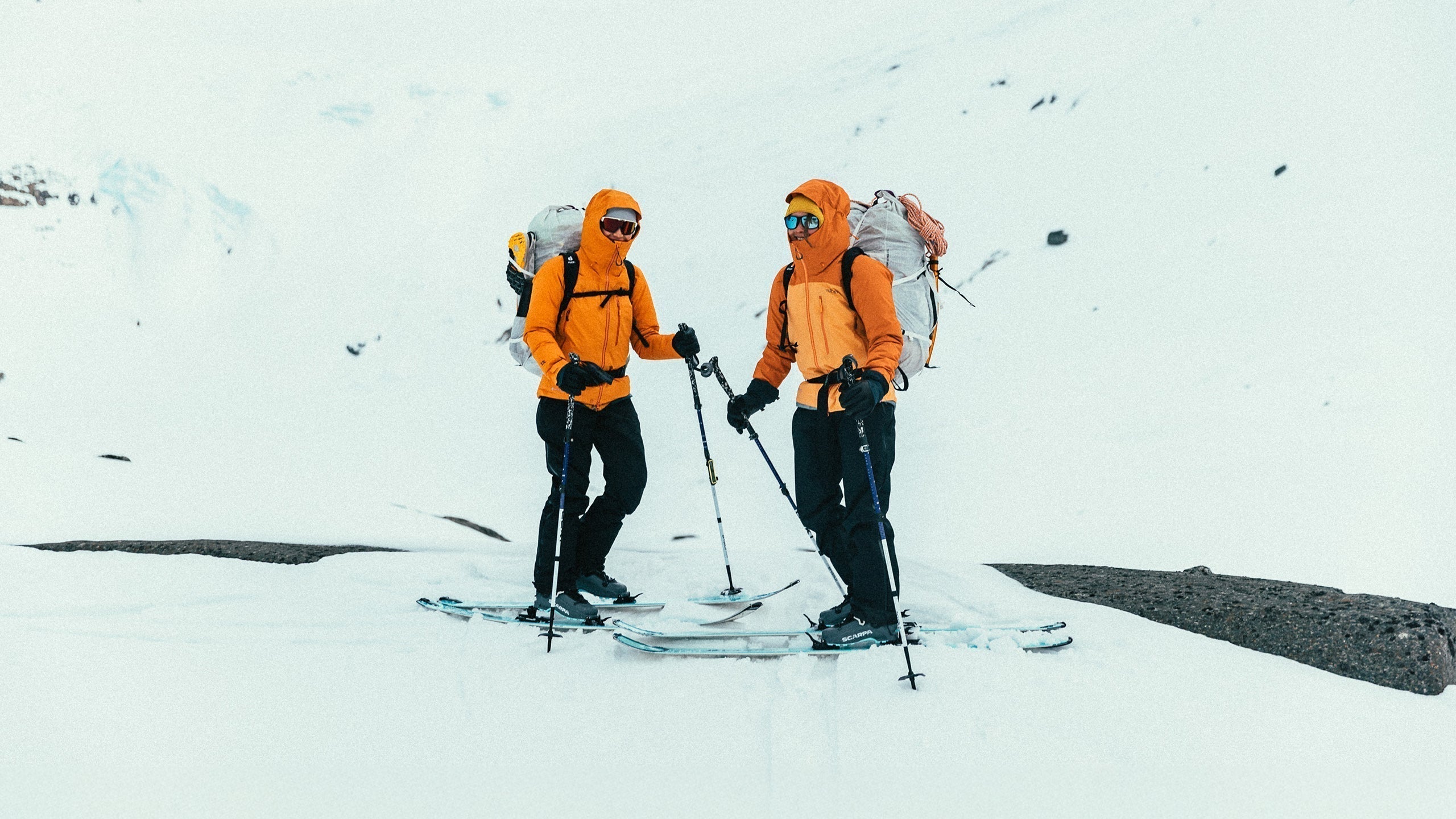
Two Hanna(h)s, two backpacks, and two pairs of skis.
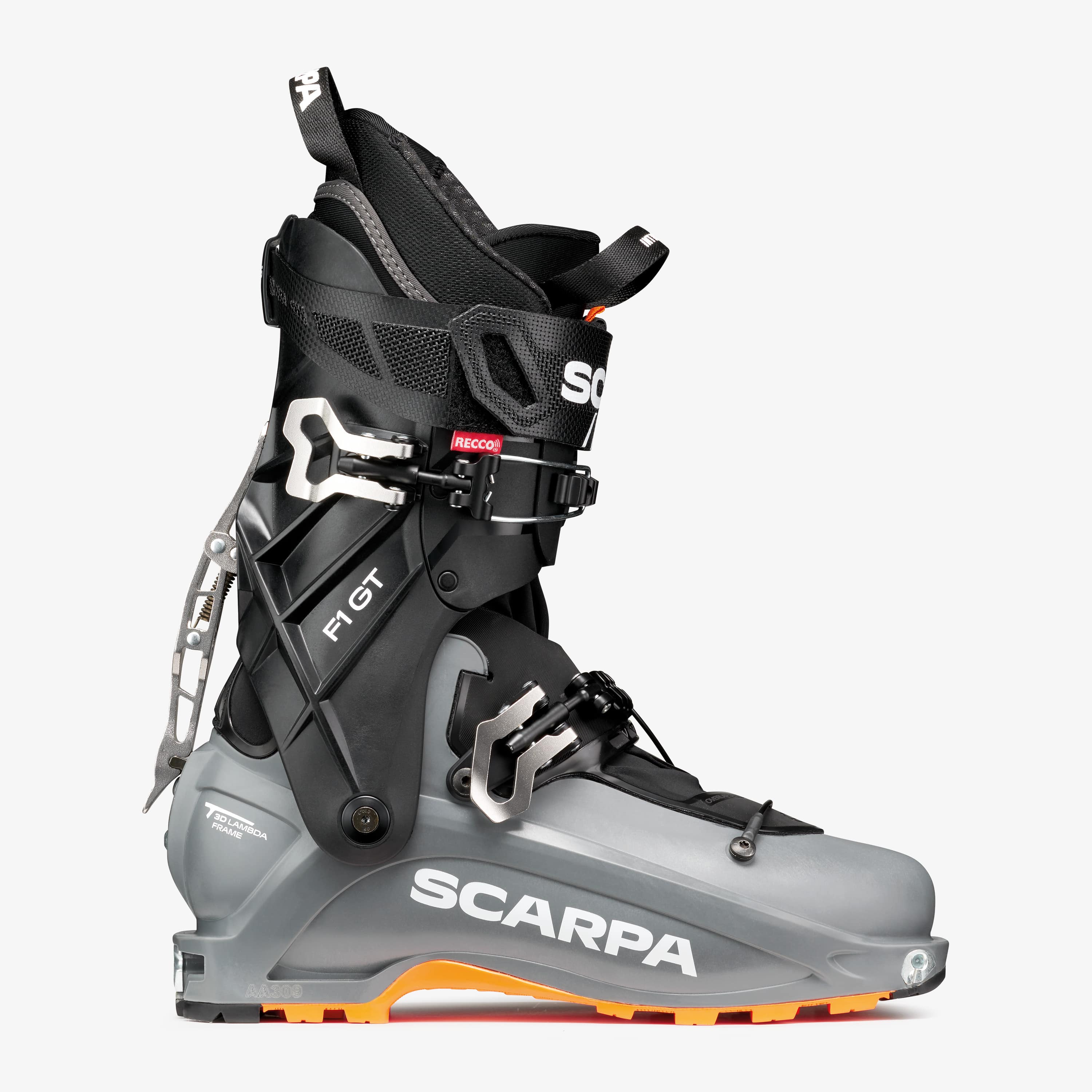
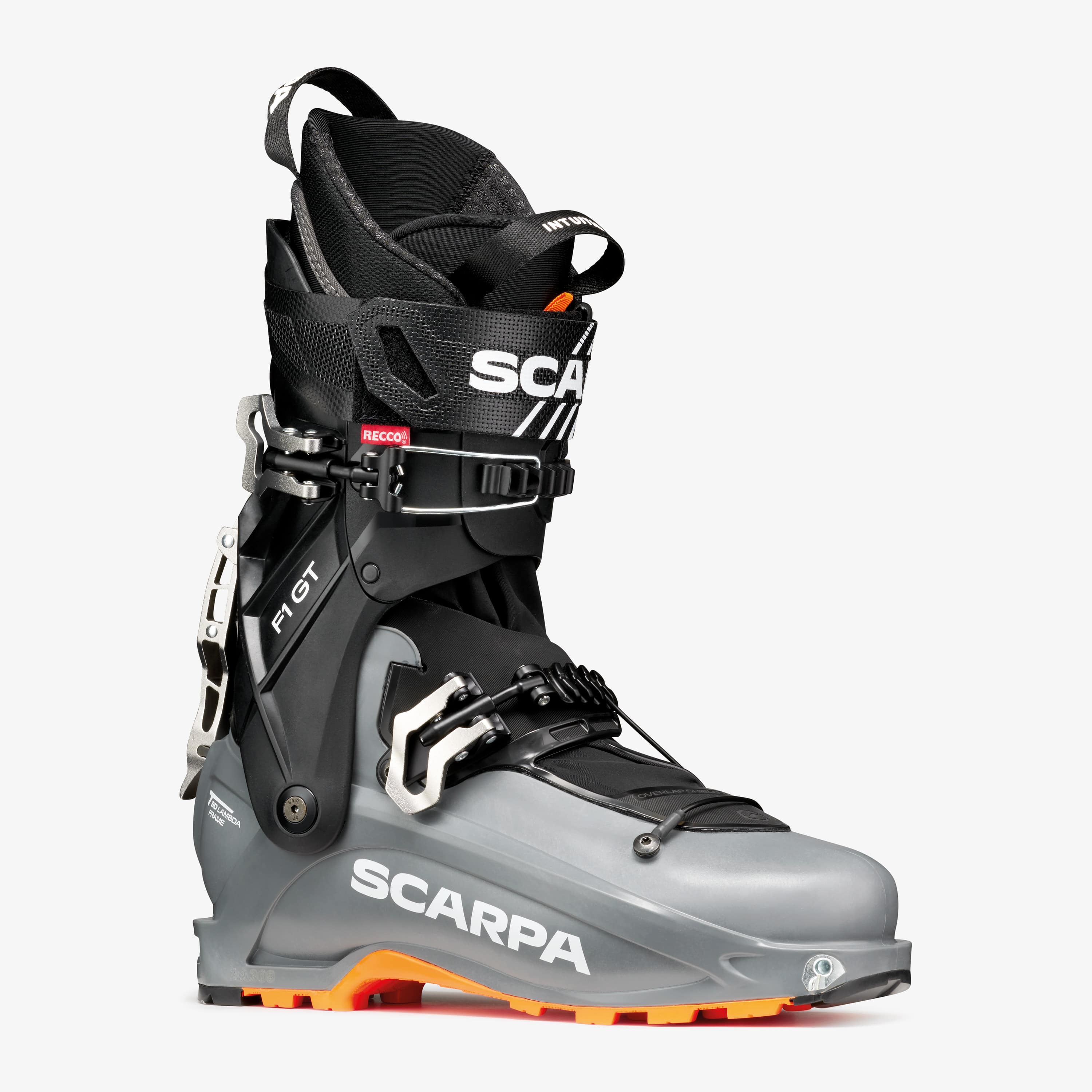
With the idea of traveling as independently and sustainably as possible, we set off with a tent and homemade travel food to cross the Jostedalsbreen from north to south in seven days. After 48 hours on trains and buses, we began our journey from Erdal toward the glacier. Starting at 50 meters above sea level, and with no snow in sight, our skis first went onto our already heavy backpacks. After climbing 400 meters of elevation, we finally decided to swap our running shoes for ski boots and made our way across the partially narrow snow bands.
As we gained altitude, the snow increased — but so did the clouds and the wind. By afternoon, it had turned into a storm with fierce gusts that barely allowed us to stay on our feet.
A small bivouac hut at the foot of the glacier offered us shelter and the chance to discuss our next steps without having to battle the fierce gusts. The wind grew stronger, the visibility on the glacier worse, and so we had little choice but to end the day right there. Hoping for an improvement in the weather, we spent the night in the small hut.

Hope is a good thing, but nature is stronger — and so we were still not granted the chance to continue the next morning. The storm did not ease. Powerful wind gusts lashed against the hut, and even a few steps around it became a challenge. So the only option was to keep waiting, hoping, and being patient. Accompanied by heavy rain, the weather kept us trapped in the bivouac for another day. Gusts of 100 km/h would likely have torn our tent to pieces — all the more grateful we were for our solid shelter.
The forecast for the following day, unfortunately, offered no improvement. On the contrary: the same wind, even more rain. Another test of patience. Our inner restlessness, the urge to move, and the strong motivation to finally get going grew bigger and bigger. More than once we considered pushing on despite the unfavorable conditions. But roaring wet-snow avalanches, zero visibility on the glacier, and the blows of the wind in our faces kept leading us back to the only right decision: to wait.
And so, an unplanned stopover turned into three nights and two full days in the bivouac.
On the fourth day, we finally passed our test of patience and were rewarded with better weather or at least we believed so when the alarm rang at 4 a.m. With an early start, skipping one summit or another, and planning a few very long days, we hoped we could still manage to cross the glacier in the time we had left.
At first, everything went smoothly, until a sudden whiteout on the first glacier plateau took away all visibility. On flat terrain, thanks to GPS navigation, this wasn’t an issue, but right before the next icefall we had to stop. Crevasses opened up to our right and left. It became clear very quickly: without visibility — not a step further. Time passed, wind and cold increased, and the “waiting game” entered the next round. We dug ourselves a hole in the snow to get some shelter from the icy wind. Three long hours went by until the clouds finally opened and we could ski down the icefall.

Our route then led us onto the main plateau of the Jostedalsbreen, through yet another major icefall. Seracs towering in the middle, avalanches and icefall risk on both sides. The lesser of two evils — that was our choice. After a brief discussion, we decided to rope up and navigate the crevasse maze with the greatest possible distance to the flanks.
Once we reached the top, the relief was immense and so was the exhaustion. It was already evening, but we still wanted to tag the planned summit, Brenibba. In yet another whiteout, we broke trail up the steep slope. At the summit: still nothing but white in every direction. Take the skins off, switch gear, head to the bivouac spot — that was the plan. But reality looked different.
The stopper on Hannah’s ski wouldn’t release. With a confident “It won’t take off, don’t worry,” she placed the ski in the snow to step in — but the ski was faster. It slid over an edge and disappeared into the white toward the icefall. In the middle of the largest mainland glacier in Europe, with only one ski — worst case. It was clear we had to search for it.
In the whiteout we skied down the slope, scanning everything. A track — maybe from the ski? We followed a faint line in the snow, desperate but still hoping. A brief window of visibility revealed a band of rock and in front of it: a black streak. Was that the ski? It really was. At the only rocky spot on the entire slope, it had come to a stop, just before the drop-off. We could hardly believe our luck and were simply overwhelmed with gratitude.
Physically and mentally exhausted, we climbed back up once more to descend on the correct side. After a 19-hour day, we were just incredibly happy to finally lie down in our sleeping bags.
The next morning, we were awakened by brilliant sunshine. Impressed by the vast dimensions of the glacier plateau, we made good progress, tagged two summits, and broke trail across endless white expanses. This dreamlike day was crowned with a spectacular sunset and dancing northern lights. Flickering across the entire sky, they left us standing in awe in the cold. Grateful and fulfilled, we allowed ourselves a few hours of sleep before continuing south the next day.
Once again, countless kilometers of flat terrain lay ahead of us — broken up by another summit for variety. From our final bivouac spot, we could already see our destination: the Fjærlandsfjord. One last night in the snow, then it was down into the valley. After seven days, despite many highs and lows, we reached the southern end of the glacier — and took buses and trains back to Innsbruck.
Spending seven days completely alone and self-sufficient on the largest glacier in Europe was an extremely impactful experience from which both of us were certainly able to learn a great deal. It was a successful tour full of adventure through an incredibly impressive landscape. Massive icefalls, unbelievable expanses, dancing northern lights, and the good time we shared made the tour something truly special.

Northaway:
- A way through the north
- Away from ‘tubo alpinism’
- A way across Europe's biggest continental glacier
- Away from planes
- A way back to self-sustained, minimalistic mountaineering
Tour Data
Distance 96,8 km
Ascent 3915 m
Descent 4098 m
Duration 7 days
Weight 20+kg per backpack
Total travel time
Outbound: Innsbruck → Erdal: 43 hours
Return: Skeide Bru → Innsbruck: 50 hours
Total: 93 hours on the move
CO₂ Emissions Comparison
Bus & train: 153, 9kg CO2 per person
Comparison:
Plane: 458 CO2 per person
Car: 713 kg CO2 per person
Who we are:
Hanna Löberbauer
Sport Science student, University of Innsbruck
Currently completing the mountain guide training program
26 years old, originally from Mondsee, living in Innsbruck
Hannah Bär
In the final stages of her medical degree at the University of Ulm
26 years old, living in Innsbruck